 Bharat Taxi
Mobility

Complete full KYC in a single live video call — document capture, liveness check, and agent verification in one session, producing a compliant, audit-ready record without a branch visit or courier-based paperwork.
Fast, secure, and compliant verification built for real-world scale.
Customers complete identity verification from their phone or laptop, so onboarding that used to need a branch visit or a field agent finishes in one call.
Every session is recorded with timestamp, agent ID and the documents shown on camera, giving your compliance team a complete record to produce on demand.
An agent reviews the document and face match live on the call, so you get a verified or flagged outcome immediately instead of waiting on manual back-office review.
Pair Video KYC with our Aadhaar, PAN or DigiLocker verification APIs to pre-fill customer details before the call, so the agent only needs to confirm, not re-enter.

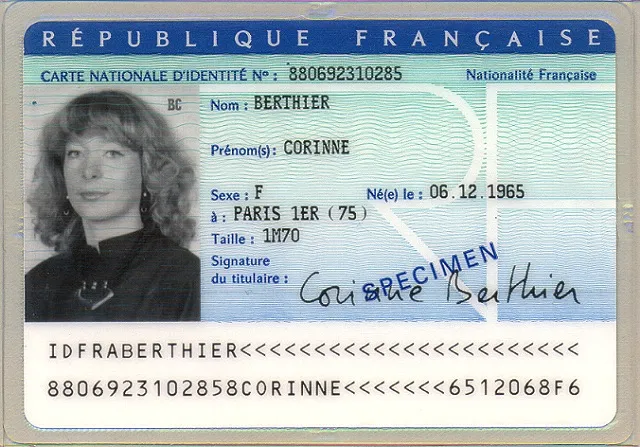
Video KYC is a live, agent-assisted video call that replaces an in-person branch visit for identity verification. The customer shows their original ID document on camera, completes a liveness check, and a trained agent visually confirms the details in real time — all captured as a single, timestamped, audit-ready session you can retrieve later. Video KYC relies on the same Face Match & Liveness API used across our identity-verification suite.
The customer's ID document and live face are checked for liveness and match in real time, so a printed photo, screen replay or recorded video fails the session.
A trained agent verbally confirms name, document number and address on camera, and the full session is recorded and stored against the verification record.
New to this term? See our glossary definition of Video KYC (V-CIP).
Trusted across industries for fast, compliant verification.

Open savings accounts, wallets or trading accounts fully online by completing the final identity check over a live video call instead of a branch visit.

Add a live video verification step before disbursing high-ticket loans, so the customer's identity is confirmed by a human the same day as approval.

Confirm the policyholder's identity on camera before issuing high-value life or health policies, reducing fraudulent or misrepresented applications.
Refresh KYC records for existing account holders on a video call instead of requesting another branch visit or physical document submission.

Video KYC sessions involve a recorded call and the customer's original ID document, so session data is handled to the same standard as our other identity APIs. Video KYC is defined as V-CIP in the Reserve Bank of India's KYC Directions as the only fully-digital method treated as face-to-face equivalent.
The verification flow follows what India's RBI Video-based Customer Identification Process guidelines expect, so it fits into an existing V-CIP-based onboarding policy without rework.
A trained agent confirms document and liveness live on the call, giving you a human-reviewed decision alongside the automated checks.
Every session is recorded with timestamp, agent ID and the documents shown on camera, ready to produce for a compliance review.
Customers join from a secure link on any phone or laptop with a camera, which keeps drop-off low compared to app-based flows.
Pre-fill customer details using our Aadhaar, PAN or DigiLocker APIs before the call, so the agent only has to confirm, not re-collect, the data.
Recording and document retention periods are configurable, so storage can align with your DPDP Act and internal compliance policies.

We offer APIs and tools for identity verification, compliance, fraud prevention, financial assessment, and onboarding automation.
Teams in mobility, IT services, hiring, education and technology use Veriqos Technologies to verify people and businesses before they onboard them.




Blog
Identity fraud prevention India increasingly starts with the same two checks: PAN for financial identity, Aadhaar for demographic and biometric identity. Identity Fraud Prevention India: The Core Checks One of…
Read More about Fighting Fraud: Using PAN and Aadhaar Verification to Protect Your Business
More from the blog
View More blogsTeams across mobility, IT services, hiring, technology and education run their identity and business verification on Veriqos Technologies.
Bharat Taxi
Mobility
Whizlancer Infotech
IT Services
Resourcedekho
Hiring & Staffing
Tylect
Technology
Botixbo
Education
Need help with something? Want a demo? Get in touch with our friendly team and we'll get in touch within 2 hours.

Need help with something? Want a demo? Get in touch with our friendly team and we'll get in touch within 2 hours.
View All APIsTell us a bit about your use case and we'll get your keys and onboarding call scheduled.
On this page
A video KYC API lets a regulated business identify a customer over a live video call instead of meeting them in person. In India this is known as the Video-based Customer Identification Process, or V-CIP, and it is permitted for regulated entities under the Reserve Bank of India's KYC rules. This guide explains what a video KYC API does, how a typical session runs, what the rules expect, and how teams design a flow that customers actually finish.
Some onboarding routes have limits. OTP-based Aadhaar e-KYC, for example, comes with restrictions on the accounts it can be used for. Video-based identification closes that gap: it gives a remote process that is treated as equivalent to an in-person verification, so a customer can open a full account without visiting a branch. A video KYC API is the technology that makes that remote process practical at scale.
The RBI's KYC Directions set out the requirements for V-CIP, and they shape how any video KYC API is built and used. At a high level they cover: the session being live and run by a trained official of the regulated entity, liveness checks, capture of the customer's location, capture of the PAN, the customer's consent, secure recording and storage of the session, and review of the completed process. Because these requirements are detailed and can change, read the current text of the RBI's KYC Directions for NBFCs rather than relying on a summary, including this one.
Video KYC fails most often for practical reasons rather than compliance ones. The customer's connection drops, the light is poor, they do not have their PAN card to hand, or they are asked to wait in a queue for too long. A good video KYC API flow is designed around those realities.
Two technical checks sit at the heart of a video KYC API session. Liveness detection checks that a real person is present rather than a photo, screen replay or mask. Face matching compares the person on the call with the photo on their identity record. Both produce signals for the official to use; neither replaces the official's judgement in a V-CIP process. Our Face Match & Liveness Detection API covers these checks on their own for flows that do not need a full video session.
Because a video KYC API session needs a trained official on the other side, it is as much an operations question as a technology one. Plan for peak hours, define how long a session should take, and decide which cases go back to the customer and which can be completed. Track completion rates at each step, from consent to a finished session, so you can see where customers drop out and fix that step rather than the whole flow.
A video KYC API produces sensitive records: video, images of identity documents, and location data. Store them securely, restrict who can view them, keep them only as long as your retention rules require, and log every access. Customers should be told how their recording will be used and kept. India's data protection framework also applies to this data, alongside the KYC rules.
Use a video KYC API when you need a full, in-person-equivalent identification without a branch visit: for example, account types that OTP-based e-KYC cannot fully cover, or customers you want to bring fully on board remotely. For lower-risk products, lighter checks such as DigiLocker-based verification, PAN verification and bank account validation may be enough on their own. Matching the check to the risk keeps the experience fast for most customers and reserves the video KYC API session for the cases that really need it.
Start by mapping which of your products need a V-CIP process, list the checks that can run before the call, and decide how your operations team will staff live sessions. With those decisions made, integrating a video KYC API becomes a well-defined project rather than an open-ended one.
Tell us what you need to verify. Our team will get back to you within 24 hours with the right APIs and pricing.
We respect your privacy. No spam.