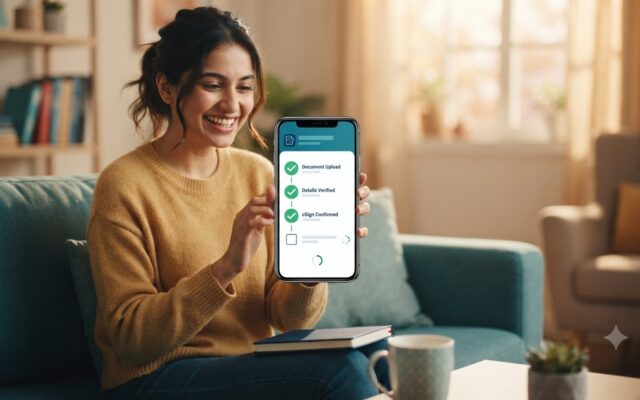

In brief: the Aadhaar eSign vs standard eSign question is about identity assurance: Aadhaar eSign ties the signature to a verified identity through an OTP, while a standard eSign records the act of signing. This guide compares Aadhaar eSign vs standard eSign and when to use each.
On this page
Electronic signatures have replaced ink-and-paper signing for most business documents, but not all eSignatures carry the same legal weight or identity assurance. In India, the distinction between Aadhaar eSign and a standard (click-to-sign) eSignature matters more than most businesses realize.
What Is a Standard eSign?
A standard eSignature is typically a click-to-accept action, a typed name, or a drawn signature captured in an app — legally valid for many document types under the IT Act, but with weaker identity assurance since it doesn't verify who is actually signing.
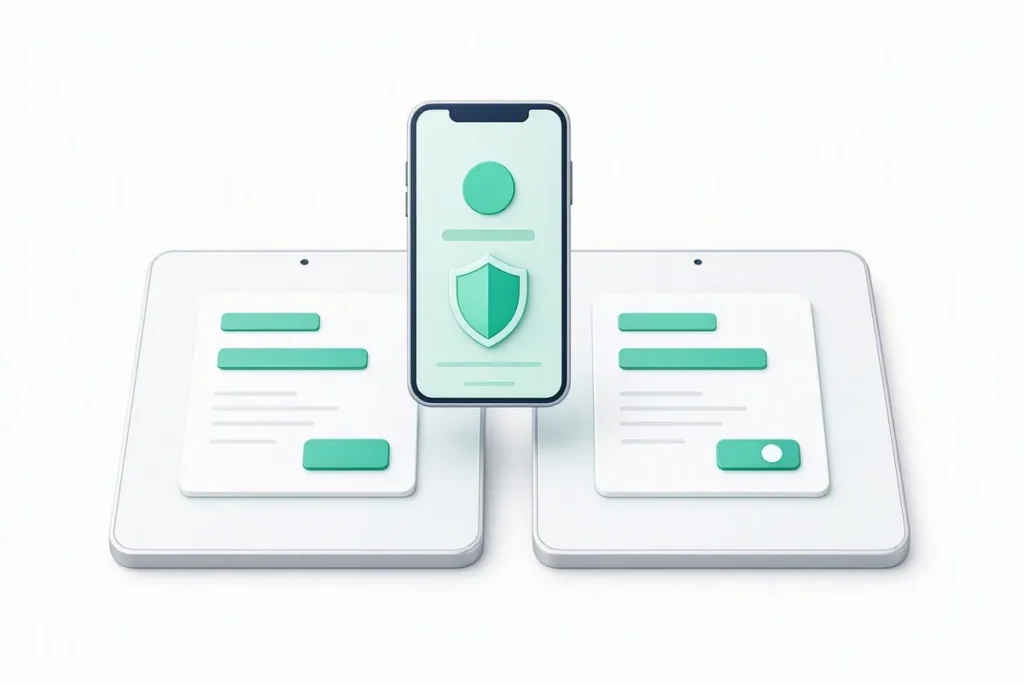
What Is Aadhaar eSign?
Aadhaar eSign is a legally recognised digital signature under the Information Technology Act, generated after the signer authenticates via Aadhaar OTP or biometrics. Because it's tied directly to a UIDAI-verified identity, it carries stronger legal standing and non-repudiation — the signer can't later credibly claim someone else signed on their behalf.
Key Differences
- Identity assurance — Aadhaar eSign verifies the signer's identity at the moment of signing; standard eSign typically does not.
- Legal standing — Aadhaar eSign is explicitly recognised as equivalent to a handwritten signature under Indian law; standard eSign validity varies by document type and context.
- Non-repudiation — Aadhaar-linked signing makes it far harder to dispute who signed a document later.
- Use cases — Aadhaar eSign is preferred for loan agreements, insurance policies, and other high-value or regulated documents; standard eSign is often sufficient for internal or low-risk approvals.
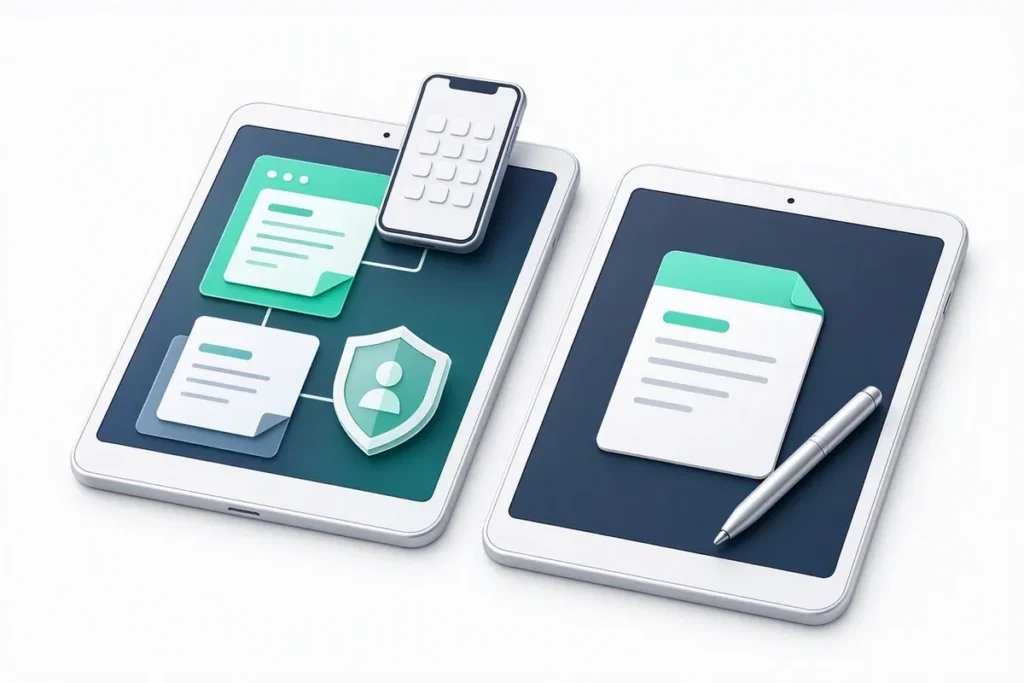
When to Use Which
For high-value financial agreements, regulatory filings, or anything likely to face legal scrutiny later, Aadhaar eSign's identity binding is worth the extra step. For lower-stakes internal approvals or acknowledgements, a standard eSign is usually sufficient and faster to implement.
How Veriqos Technologies Supports Aadhaar eSign
Veriqos Technologies integrates Aadhaar-based eSign directly into document workflows, handling OTP-based signer authentication and producing a compliant, auditable signature trail without building UIDAI integration from scratch.
Choosing between them
The choice between Aadhaar eSign vs standard eSign usually comes down to how much assurance you need about who signed. For loan agreements and other high-value contracts, many teams prefer Aadhaar eSign because the signer’s identity is confirmed through an Aadhaar OTP. For routine approvals, a standard electronic signature with a good audit trail is often enough. Map each document type to the level of assurance it needs before you decide.
Whichever you choose, keep the signed document, the audit trail and the identity evidence together, so you can show exactly who signed and when.
If you are still unsure about Aadhaar eSign vs standard eSign for a document, ask your legal team which level of proof they would need if the signature were ever disputed.
Conclusion
Choosing between Aadhaar eSign and standard eSign isn't about which is universally "better" — it's about matching the signature method's identity assurance to the stakes of the document being signed.
Related verification APIs
- Digilocker Verification API — Verify your customers’ government documents instantly through Digilocker with Veriqos Technologies’ Digilocker Verification API
- Signature Match API — Veriqos Technologies Signature Validation API enables banks, insurance companies, and digital platforms to compare & verify…
Building this into a insurance providers workflow? See Veriqos Technologies for Insurance Providers, or browse the full verification API marketplace.
More about Aadhaar eSign vs Standard eSign
To learn more about Aadhaar eSign vs Standard eSign, explore our Aadhaar Verification API and Digilocker Verification API, or talk to our team. For the official source, see the UIDAI website.