

On this page
Before financing a vehicle, insuring it, or buying it second-hand, businesses often need to confirm its registration details — but a physical RC copy isn't always on hand. The chassis number usually is. Here's what it is, how chassis-to-RC verification actually works, and where it fits into a lending, insurance, or dealership workflow.
What Is a Chassis Number?
Every vehicle has a chassis number — a unique code assigned by the manufacturer and physically stamped onto its frame at the time of manufacture. Internationally, this identifier follows the VIN (Vehicle Identification Number) standard, a 17-character code. Unlike a registration number, which is issued by the transport authority only after a vehicle is registered, the chassis number exists from the moment the vehicle is built — which makes it useful whenever an RC isn't yet available or isn't at hand.
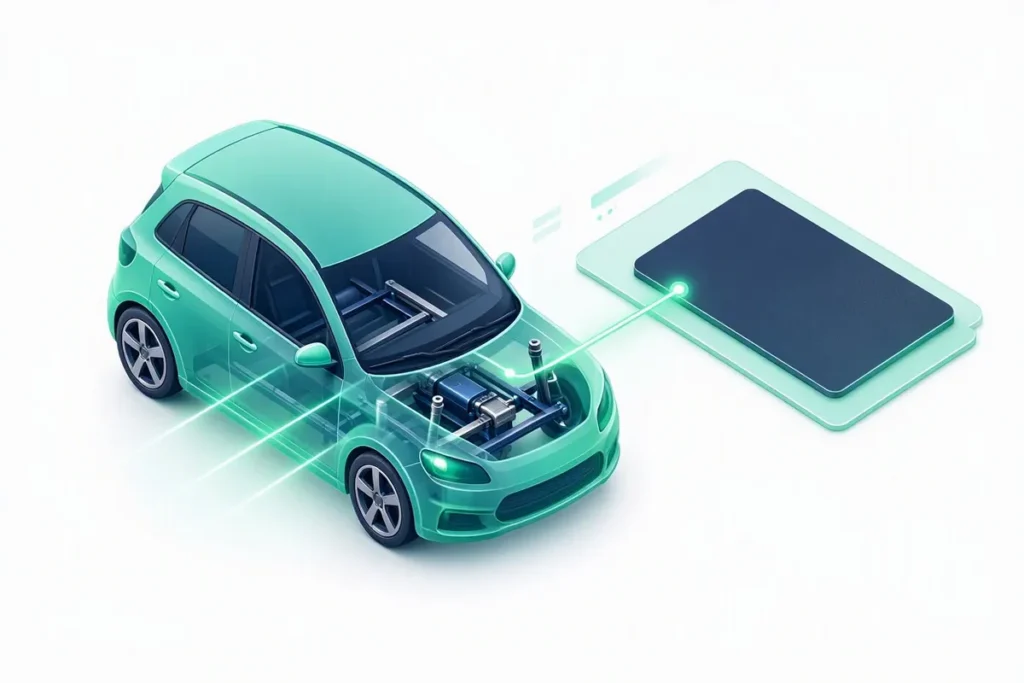
Why the Chassis Number Matters More Than the RC in Some Cases
- New vehicle financing — dealers and lenders often need to verify a vehicle before its registration is complete.
- Used-vehicle inspection — buyers and dealers can confirm a vehicle's registration history even without the physical RC card present.
- Dealer inventory funding — stock financing frequently happens before individual vehicles are registered to a retail buyer.
- Insurance proposals — insurers can validate vehicle specifications during underwriting, ahead of policy issuance.
How Chassis-to-RC Verification Works
A chassis-to-RC verification API takes a vehicle's chassis number and looks it up against official vehicle registration records, returning the matching RC details — registered owner, vehicle class, registration status, and more — in real time. That turns a chassis number, which on its own is just a stamped code, into a verifiable registration record.
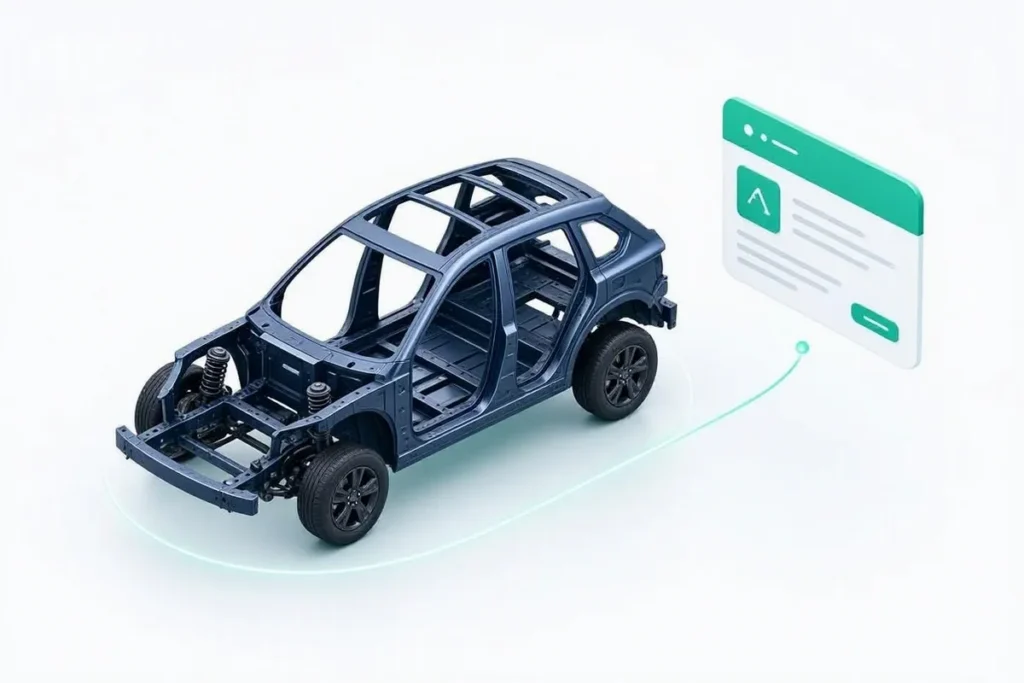
What Does a Chassis Number Look Like?
Chassis numbers vary in format by manufacturer and are typically 11 to 17 characters long, mixing letters and numbers. Older vehicles may use manufacturer-specific formats, while newer vehicles increasingly follow the 17-character VIN standard. Because formats aren't fully standardised across manufacturers, matching a chassis number against real registration records — rather than just validating its format — is what actually confirms a vehicle's identity.
How Veriqos Technologies Helps
Veriqos Technologies' Chassis to RC Verification API checks a chassis number against real vehicle registration data and returns RC details instantly — letting lenders, insurers, and dealers verify a vehicle before its registration is finalised, without waiting on a physical RC copy.
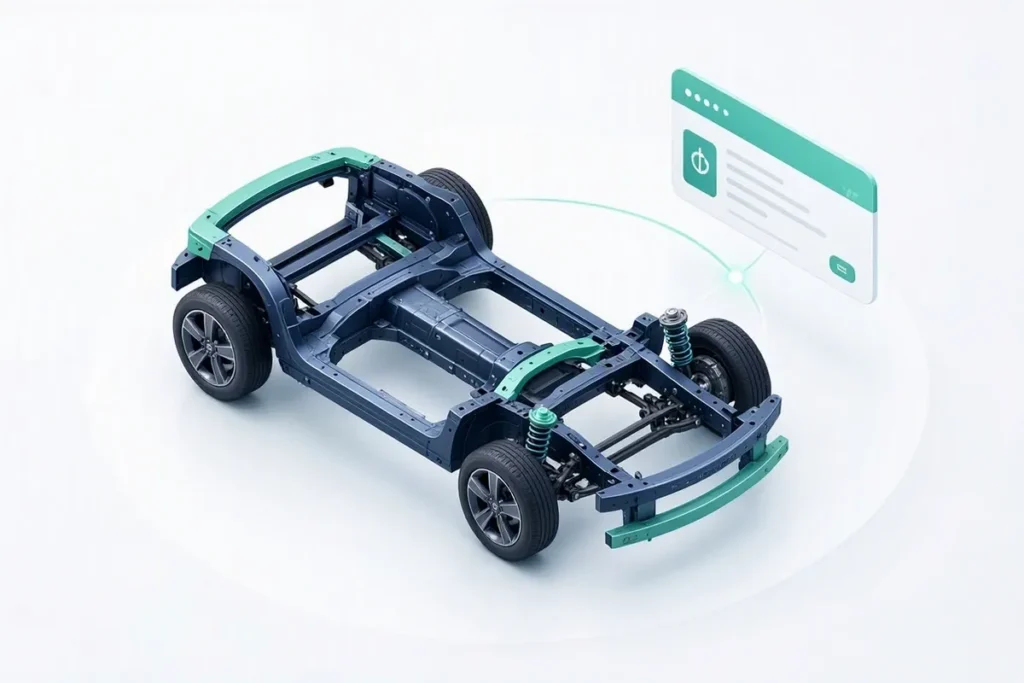
Building chassis to RC verification into lending and insurance
Chassis to RC verification is most valuable at moments when money is about to be committed against a vehicle: a loan disbursal, an insurance policy or a used-vehicle purchase. At those moments, confirming that the registration record belongs to the physical vehicle protects against swapped plates, altered papers and vehicles that do not exist.
For vehicle lenders
Capture the chassis number during the physical inspection or from the dealer’s invoice, run chassis to RC verification, and compare the returned registration details with the loan file. Check the owner name against the borrower, and record the registration number so later checks, such as insurance status, use the confirmed number.
For insurers
At underwriting, chassis to RC verification confirms the vehicle being insured matches the proposal. At claims, it confirms the vehicle in the claim is the insured vehicle. Both steps reduce fraud from mismatched or substituted vehicles.
For used-vehicle marketplaces
Running chassis to RC verification on listings lets buyers trust that the vehicle described is the one being sold. Combined with insurance and FASTag checks, it gives a fuller picture of the vehicle’s status.
Handling mismatches
If the registration record does not match the documents, pause the transaction and ask for clarification. Common innocent causes include typing errors in the chassis number and recent transfers of ownership that have not yet been updated; less innocent causes include altered documents. A clear review process handles both.
Keeping records
Store the chassis number, the registration details returned, the comparison result and the date of each check. That record supports audits and resolves disputes. Official vehicle registration services are listed on the Parivahan Sewa portal.
Before you go live
Test chassis to RC verification in the sandbox with a valid chassis number, a mistyped one and a vehicle that has changed owners, so your team knows how each chassis to RC verification result looks and which ones should go to manual review.
Verifying an RC by chassis number for auto loans
Before a vehicle loan is disbursed, chassis to RC verification answers one question: does the vehicle in front of the inspector have the registration record the borrower says it has? The detailed result also carries several fields a credit team would otherwise ask for separately.
| In the result | What a lender checks |
|---|---|
| Registration number, date and RTO | That they match the RC copy and the loan application. |
| Make, model, fuel type and manufacture date | That the vehicle being financed is the one that was valued. |
| Owner name and owner serial number | That the seller or borrower is the registered owner, and how many owners the vehicle has had. |
| Financed flag | Whether the record already shows the vehicle as financed, which needs clearing before a new loan. |
| Insurer and cover expiry date | That the vehicle is insured at disbursal. |
| RC status | That the registration is active. |
Used-vehicle loans
For a used vehicle, run chassis to RC verification with the chassis number read from the vehicle itself, not from the seller’s papers. If the registered owner is not the seller, or the record shows the vehicle as already financed, stop and ask for the transfer or closure documents before going further.
New-vehicle loans
A new vehicle may not have a registration record yet when the loan is approved. Record the chassis number from the dealer’s invoice, then run the check again once registration is complete, so the loan file holds the confirmed registration number.
The registration record can lag behind real events such as a recent sale or a closed loan. Treat an unexpected result as a reason to ask for documents, not as proof of fraud.
Conclusion
The chassis number is often the earliest reliable identifier a vehicle has, and confirming RC details directly from it removes a real bottleneck in vehicle financing, insurance, and resale workflows. As registration processes digitise further, chassis-based verification is likely to become the default starting point rather than a fallback option.
Related verification APIs
- Chassis to RC Verification API — Validate vehicle registration details from the chassis number instantly, for loan processing, insurance, or fleet onboarding.
- Fastag API Provider — Look up FASTag and vehicle details for toll, parking, and fleet use cases.
Building this into a lending or dealership workflow? See Veriqos Technologies for Banks & NBFCs, or browse the full verification API marketplace.