
In brief: a PAN verification API checks a Permanent Account Number against the official record and returns its status and the name it belongs to. This page explains what a PAN verification API can and cannot tell you.
On this page
What is a PAN Verification API?
A PAN Verification API confirms whether a Permanent Account Number is valid, active, and associated with the name a business has been given.
How it works
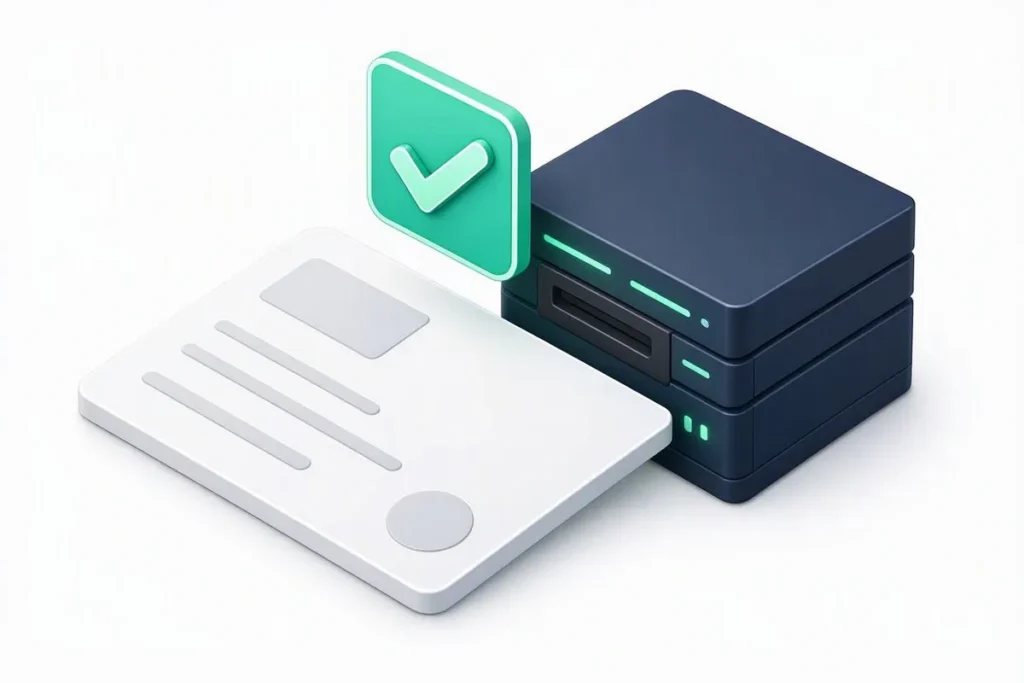
The business submits a PAN and, usually, the name it expects to be associated with it. The API checks the number against income tax department records and returns the status of the PAN along with a name-match result.
Name matching is rarely a simple string comparison. Records may hold initials, a different name order, or an older name. A useful PAN verification returns a similarity score rather than a binary answer, so the business can decide what level of mismatch is acceptable for its risk appetite.

What it is not
A valid PAN does not tell a business that the person presenting it is its holder. It confirms the number exists and matches a name; it does not authenticate the individual. Nor does it indicate creditworthiness, tax compliance, or that the holder is who they claim to be in any broader sense.
PAN verification is also distinct from PAN–Aadhaar linkage status, which is a separate check.

Where it is used
Almost universally in Indian financial onboarding, because PAN is required for most account opening and investment activity. Also in vendor and merchant onboarding, where a business needs to confirm the counterparty’s tax identity before transacting, and in employment verification.

For businesses rather than individuals
A PAN issued to a company or partnership behaves differently from an individual’s. Verifying a business counterparty usually means combining PAN verification with GST and corporate registry checks, because no single one establishes that an entity is real and currently trading.
Related terms: KYB (Know Your Business) · Name Match · CKYC · KYC
Official source
PANs are issued by the Income Tax Department, and taxpayers can view and manage their PAN details on the official income tax e-filing portal.
Getting the most from it
A PAN verification API is most useful at the start of onboarding, where it confirms that a PAN is valid and matches the name you were given. Compare names with a tolerant match, because initials and spellings vary, and send near-misses to review rather than rejecting them. Many teams run a PAN verification API alongside a bank account check so that payouts go to the right person, and use a PAN verification API again before high-value transactions. Logging each PAN verification API response with its timestamp keeps your audit trail complete.
It also helps to handle common errors gracefully. If a customer types the number with spaces or lowercase letters, clean it up before sending the request, and if a check fails, ask them to compare the number with their card rather than rejecting the application straight away. Small touches like these reduce support requests and keep genuine customers moving through the flow.
Finally, think about how often to repeat the check. A result from onboarding may be enough for low-risk products, but lending, investment and tax-related flows often re-check before key events, because a record can change status after the first lookup.
Small details, such as showing the expected format next to the input field, prevent many errors before they happen and make the whole flow feel faster.